

Effect of Electrolyte and Electrode Configuration on Cu-Catalyzed Nitric Oxide Reduction to Ammonia
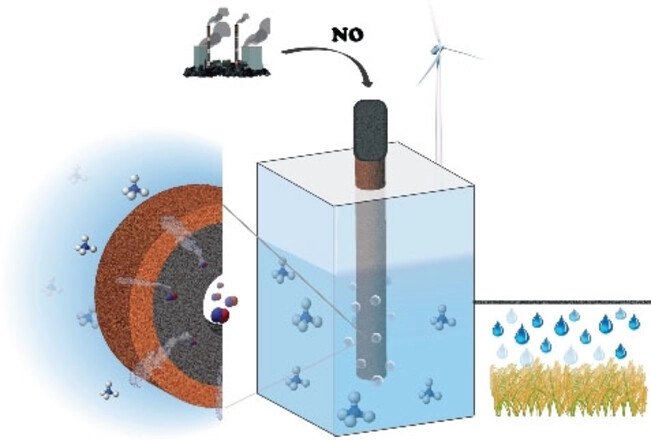
Cu electrodes favour ammonia formation from NO reduction in acid, while neutral conditions shift selectivity toward N₂O and N₂ — confirmed by EC-MS. However, using a hollow fiber electrode geometry with high NO gas flow rates, ~90% faradaic efficiency and 400 μmol h⁻² cm⁻² NH₃ production are achieved even at neutral pH, pointing toward viable waste-NO-to-fertilizer conversion.
Surface Hydride Formation on Cu(111) and Its Decomposition to Form H2 in Acid Electrolytes
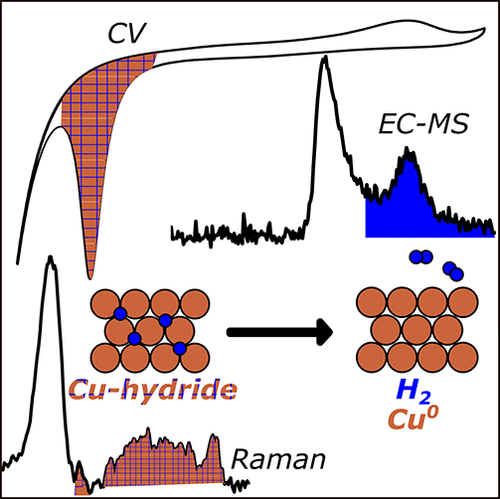
Cu(111) uniquely forms a surface hydride coincident with anion desorption, which decomposes to yield H₂ by recombination rather than oxidation — confirmed by MS and Raman spectroscopy across multiple acid electrolytes. The effect is absent on Cu(110) and Cu(100), and the hydride phase may play a catalytic role in CO₂ reduction to CH₄.
Online Electrochemistry–Mass Spectrometry Evaluation of the Acidic Oxygen Evolution Reaction at Supported Catalysts
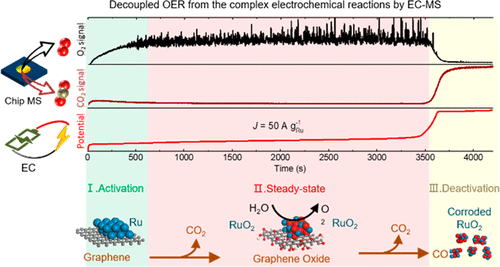
Chip-based EC-MS decouples true oxygen evolution from competing anodic side reactions in a graphene-supported Ru catalyst, enabling accurate measurement of OER onset potential and Faradaic efficiency. Activation, steady-state, and degradation processes are resolved individually — addressing a persistent measurement challenge in OER electrocatalysis.
Monitoring oxygen production on mass-selected iridium–tantalum oxide electrocatalysts
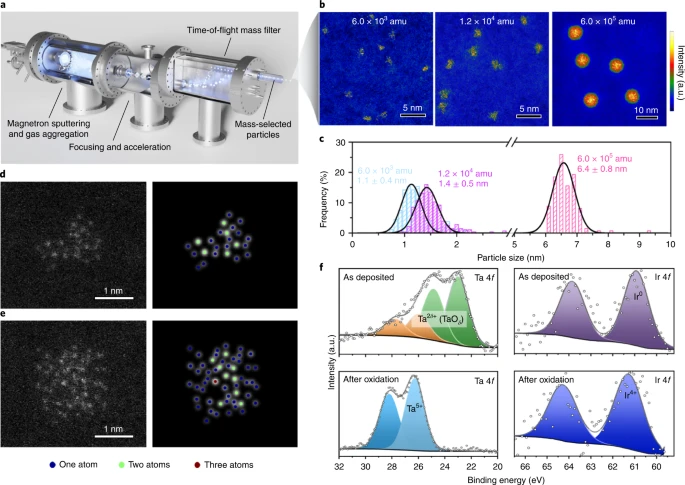
Mass-selected IrTaOx nanoparticles below 2 nm deliver 2× higher mass activity and 4× higher turnover frequency than IrO₂ at 320 mV overpotential. EC-MS with isotope labelling quantifies active sites under dynamic conditions, while DFT points to special Ir coordination environments as the origin of the enhanced OER performance.
Model electrocatalysts for the oxidation of rechargeable electrofuels – carbon supported Pt nanoparticles prepared in UHV
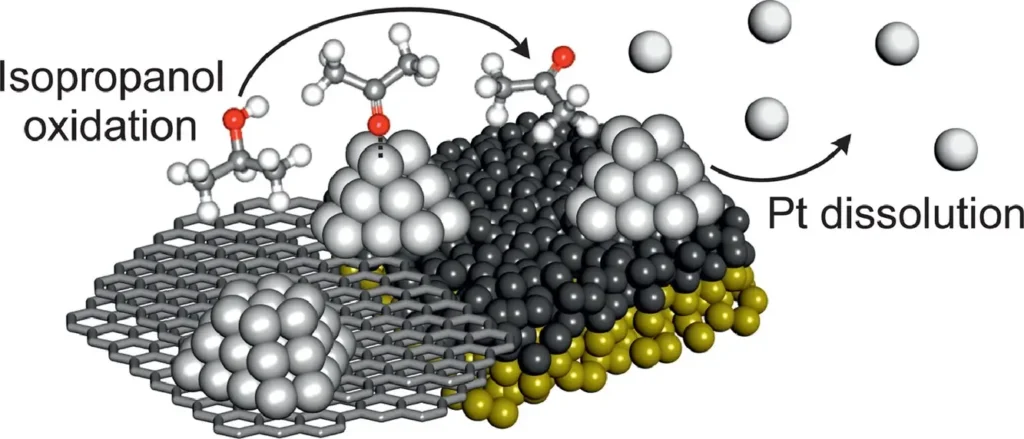
UHV-prepared Pt nanoparticles on carbon supports serve as model electrocatalysts for studying isopropanol oxidation — part of a rechargeable electrofuel cycle with acetone. Oxidation onset is at 0.3 V_RHE with high acetone selectivity and only trace CO₂ as a side product; no adsorbed CO is observed, and comparison with Pt(111) suggests particle size and low-coordination sites play a minor role.
Enhancing Iridium Nanoparticles’ Oxygen Evolution Reaction Activity and Stability by Adjusting the Coverage of Titanium Oxynitride Flakes on Reduced Graphene Oxide Nanoribbons’ Support
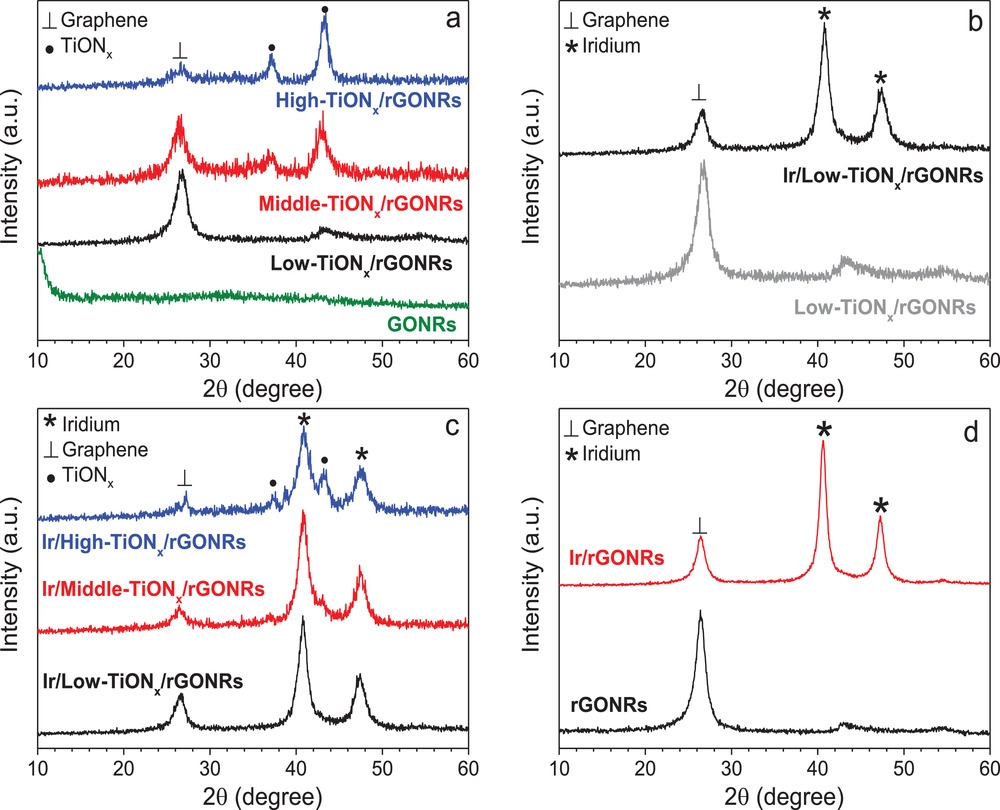
A carbon–ceramic nanocomposite of Ir nanoparticles and titanium oxynitride flakes on reduced graphene oxide nanoribbons boosts oxygen evolution reaction activity up to 30x over commercial IrO2, driven by heterojunction formation between the three phases.
On-chip electrocatalytic NO sensing using ruthenium oxide nanorods

RuOx electrodes made from ruthenium oxide nanorods outperform bare platinum for amperometric NO sensing, with a lower onset potential and higher current density. Validated for organ-on-chip use by detecting micromolar NO from live endothelial cell culture in real time.
Dynamic Interfacial Reaction Rates from Electrochemistry–Mass Spectrometry
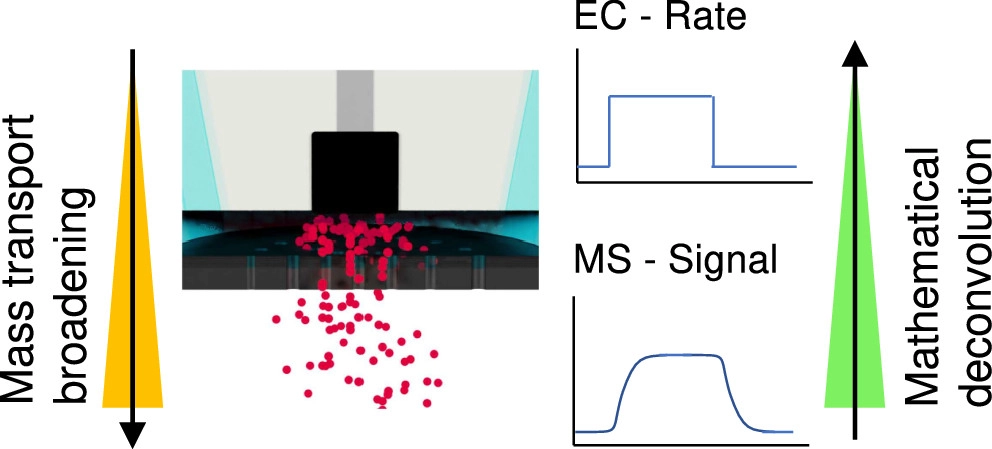
A mathematical deconvolution framework for extracting quantitative, dynamic interfacial reaction rates from electrochemistry–mass spectrometry signals, validated on hydrogen and oxygen evolution in acidic electrolyte. Published in Analytical Chemistry by Krempl et al., 2021.
The Importance of Potential Control for Accurate Studies of Electrochemical CO Reduction
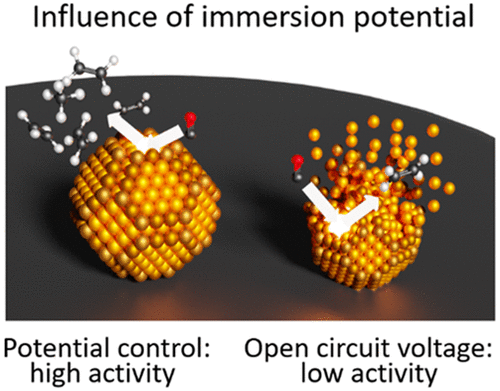
Copper nanoparticle CO reduction activity is underestimated by four orders of magnitude when catalysts are immersed without potential control. This study introduces an auxiliary cell for controlled-potential immersion, suppressing copper dissolution and revealing the true intrinsic CO reduction activity via electrochemistry–mass spectrometry.
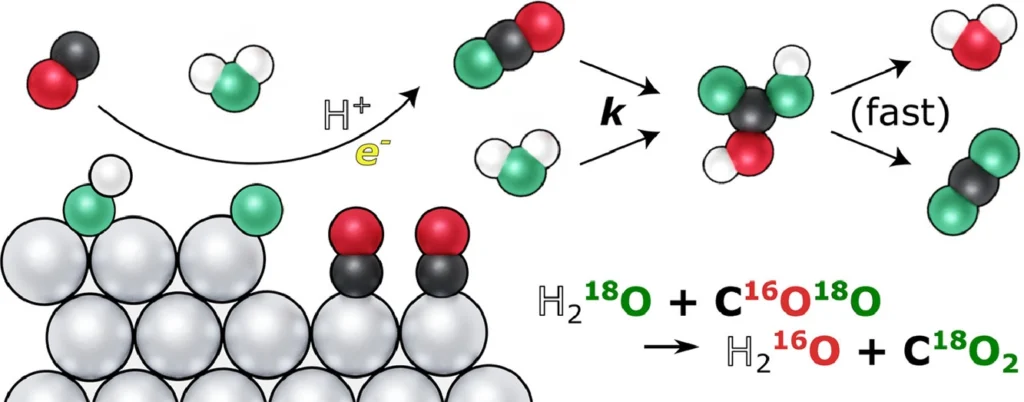
Tracking oxygen atoms in electrochemical CO oxidation – Part I: Oxygen exchange via CO2 hydration
This is the same mismatched abstract as before — it’s the “Anodic molecular hydrogen formation on Ru and Cu” text again, not the CO oxidation oxygen tracking paper. Could you double-check and paste the correct abstract?