

Tracking oxygen atoms in electrochemical CO oxidation – Part II: Lattice oxygen reactivity in oxides of Pt and Ir
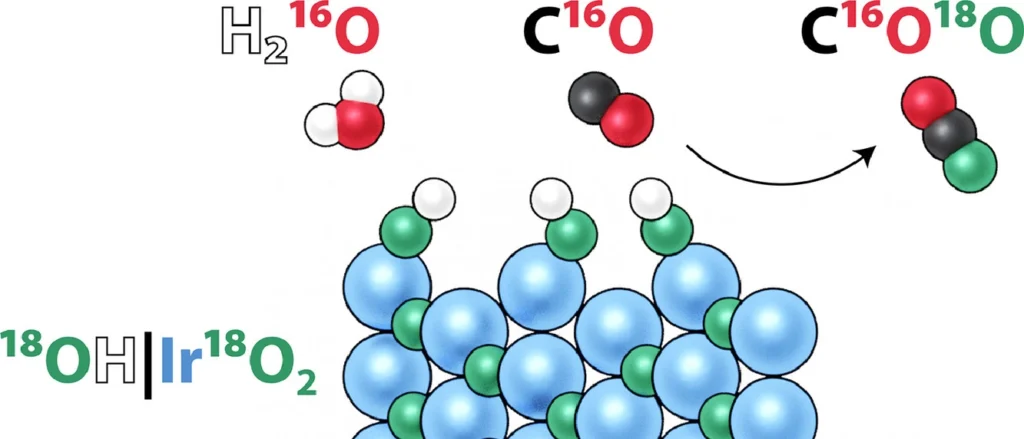
Using chip-based EC-MS with O isotope-labeled Pt and Ir oxides, this study examines lattice oxygen reactivity in electrochemical CO oxidation and water oxidation — revealing how activated lattice oxygen drives Ir’s CO oxidation and confirming surface OH as Pt’s reactive species.
Resolving the nanoparticles’ structure-property relationships at the atomic level: a study of Pt-based electrocatalysts
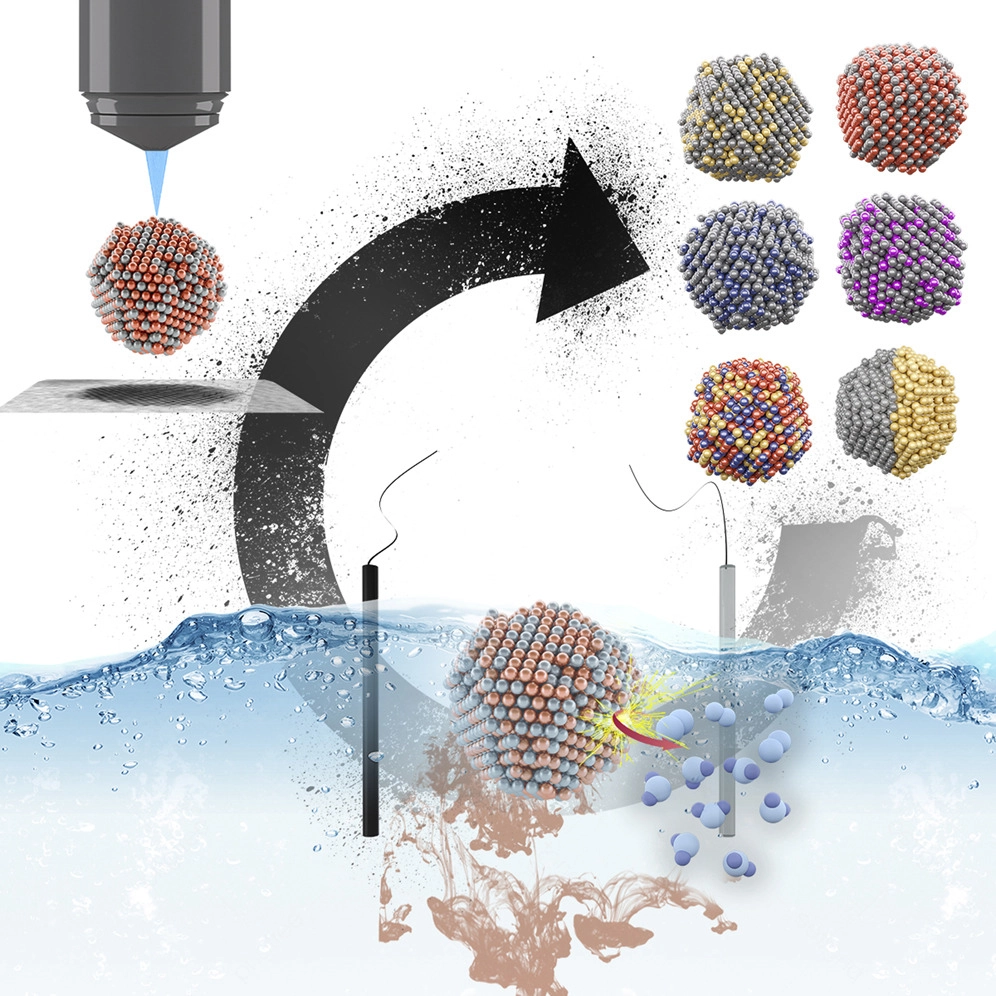
Single-particle analysis uncovers the structure-property relationships behind Pt-based electrocatalyst degradation — resolving atomic-level structure, strain, and stability before and after electrochemical cycling.
Electrochemical Stability and Degradation Mechanisms of Commercial Carbon-Supported Gold Nanoparticles in Acidic Media
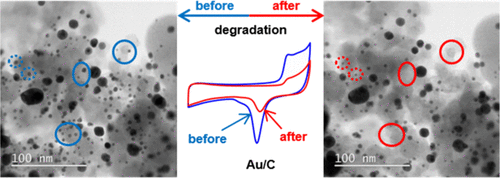
An accelerated stress test combined with ICP-MS and identical-location electron microscopy examines how commercial carbon-supported gold nanoparticles lose electrochemical surface area in acidic media — and how trace chloride dramatically speeds up their dissolution.
CO as a Probe Molecule to Study Surface Adsorbates during Electrochemical Oxidation of Propene
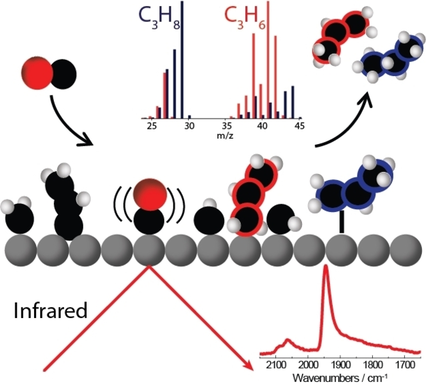
EC-MS and ATR-FTIR reveal at least two distinct classes of adsorbates formed during electrochemical oxidation of propene, identified via CO displacement, electrochemical stripping, and a redshift in the ν(C−O) IR mode.
Anodic molecular hydrogen formation on Ru and Cu electrodes
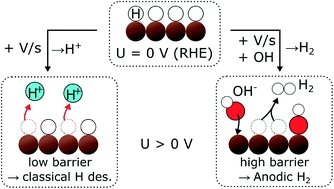
A new EC-MS study reveals anodic molecular hydrogen formation on Ru and Cu electrodes, linking H2 desorption to *OH adsorption and a high Volmer-step barrier.
Towards an atomistic understanding of electrocatalytic partial hydrocarbon oxidation propene on palladium
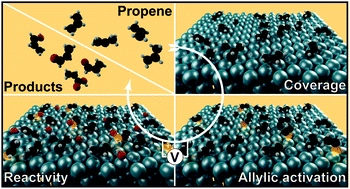
This study uses operando EC-MS combined with theoretical modeling to investigate propene electro-oxidation palladium electrodes, identifying key reaction intermediates and a coverage-dependent mechanism driving selectivity toward acrolein, acrylic acid, and a newly reported product, propylene glycol.
Impact of nanoparticle size and lattice oxygen on water oxidation on NiFeOxHy
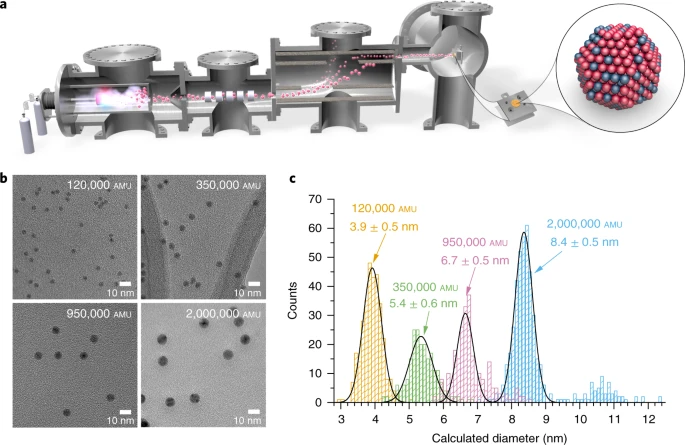
Mass-selected NiFe nanoparticles and isotope-labelling experiments show that water oxidation on NiFeOxHy in 1 M KOH does not proceed via lattice exchange but is limited to the near-surface region — yielding a record turnover frequency of 6.2 ± 1.6 s-1 at 0.3 V overpotential.
Enabling real-time detection of electrochemical desorption phenomena with sub-monolayer sensitivity
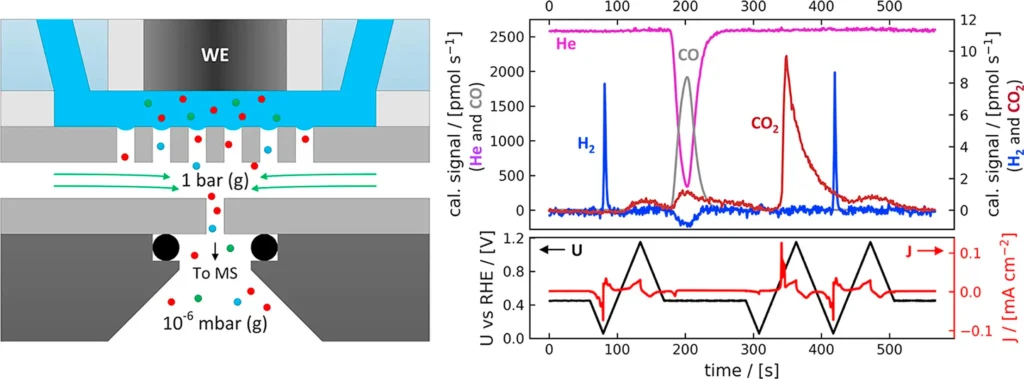
A silicon microchip EC-MS gas inlet couples directly to a mass spectrometer, capturing electrode reaction products in real time with 100% collection efficiency and sub-second response — delivering sub-turnover resolution beyond established EC-MS techniques.
Real-time detection of sub-monolayer desorption phenomena during electrochemical reactions: Instrument development and applications
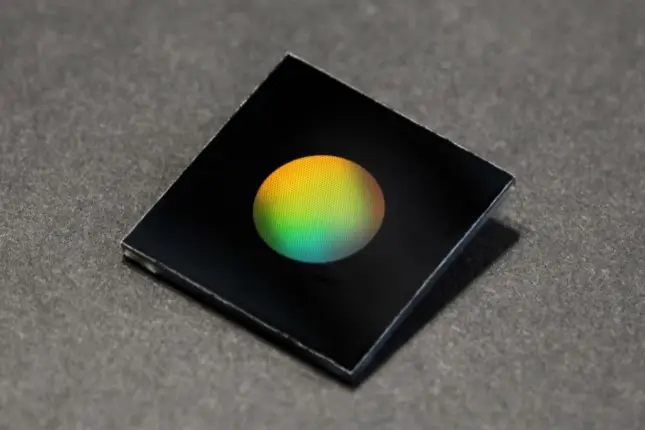
This PhD thesis by D. B. Trimarco introduces a novel EC-MS instrument built around a microfabricated membrane chip that couples wet electrochemistry directly to a mass spectrometer’s vacuum with no signal loss. The design achieves 100% collection efficiency and sub-monolayer sensitivity, outperforming conventional DEMS while keeping response times fast. Applied to HER, OER, CO oxidation and CO stripping on platinum, the instrument also uncovered a new CO reduction pathway on copper — where pre-exposing the catalyst to dioxygen temporarily boosts methane production, an effect explained by DFT as a geometric tilting effect at kink sites.
A device for extracting volatile species from a liquid
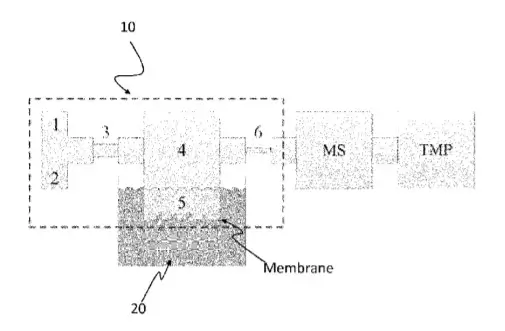
A novel membrane-based device extracts volatile species from liquids for direct MS analysis, combining the fast response of DEMS with the high sensitivity of MIMS — without needing a differential pumping stage.