

Non-aqueous chip performance
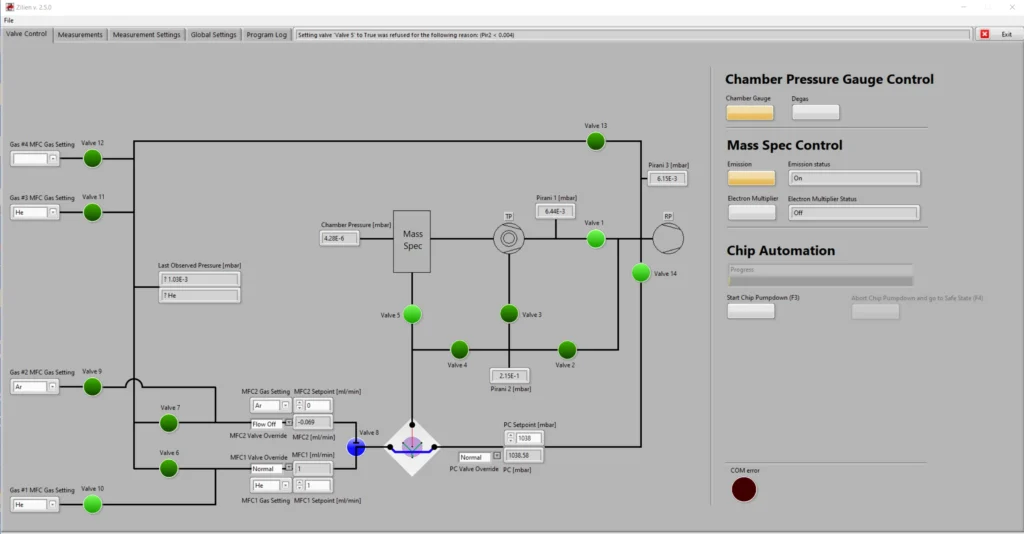
EC-MS Technical Note #5: step-by-step QMS peak and EM voltage tuning in PV MassSpec, with signal examples from a well-tuned system.
Best practices using EC‐MS system for HER
EC-MS Technical Note #17 outlines best practices for studying the hydrogen evolution reaction (HER) with a Spectro Inlets EC-MS system: choosing aqueous vs. non-aqueous chips, calibrating for accurate faradaic efficiency and TOF quantification, consulting Pourbaix diagrams for catalyst stability, proper cleaning procedures, matching scan rate to bandwidth filter, and using potentiostatic measurements with H₂ calibration to characterize HER activity.
Best practices for OER experiments
EC-MS Technical Note #16 covers best practices for oxygen evolution reaction (OER) experiments: choosing standard vs. non-aqueous chips, cleaning protocols, Pourbaix diagram considerations for catalyst stability, avoiding CO2/bicarbonate detection pitfalls in alkaline electrolyte, CV-based redox characterization, and potentiostatic methods (including SPEIS stepping) for accurate faradaic efficiency quantification.
Air‐free transfer from a glovebox
EC-MS Technical Note #6 describes a step-by-step protocol for transferring the interface block, microchip, and EC-cell into a glovebox for air-free, air-sensitive EC-MS experiments, such as battery measurements that require strictly inert conditions.
Potentiostat instability
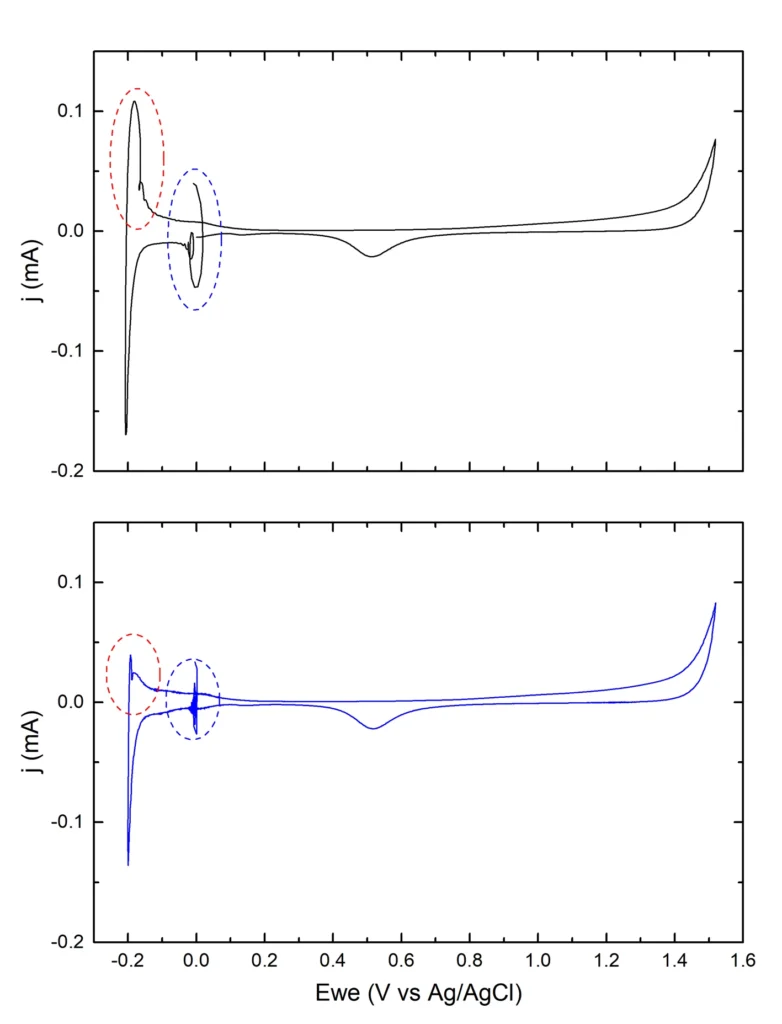
This technical note explains how to fix potentiostat instability during EC-MS cyclic voltammetry, using a series resistor combined with iR-drop compensation, illustrated with BioLogic SP-150 and SP-300 potentiostat examples.
Benchmark Measurements
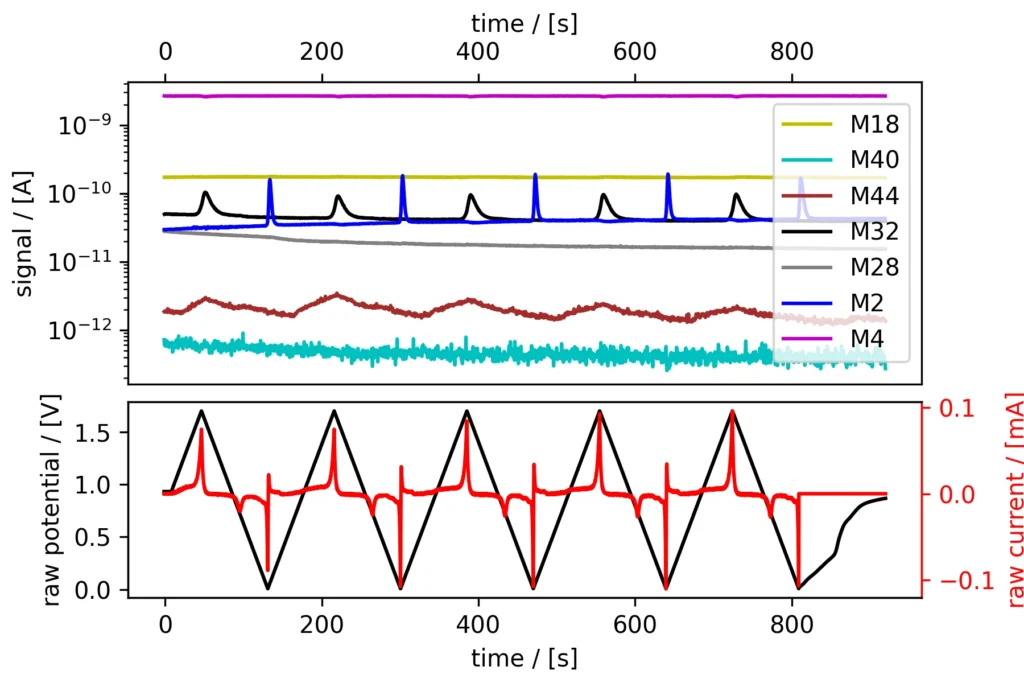
This technical note presents EC-MS benchmark measurements for Pt-Poly and glassy carbon electrodes, covering cyclic voltammetry and chronopotentiometry procedures for the hydrogen and oxygen evolution reactions and M2 signal decay analysis.
Gas Pulses
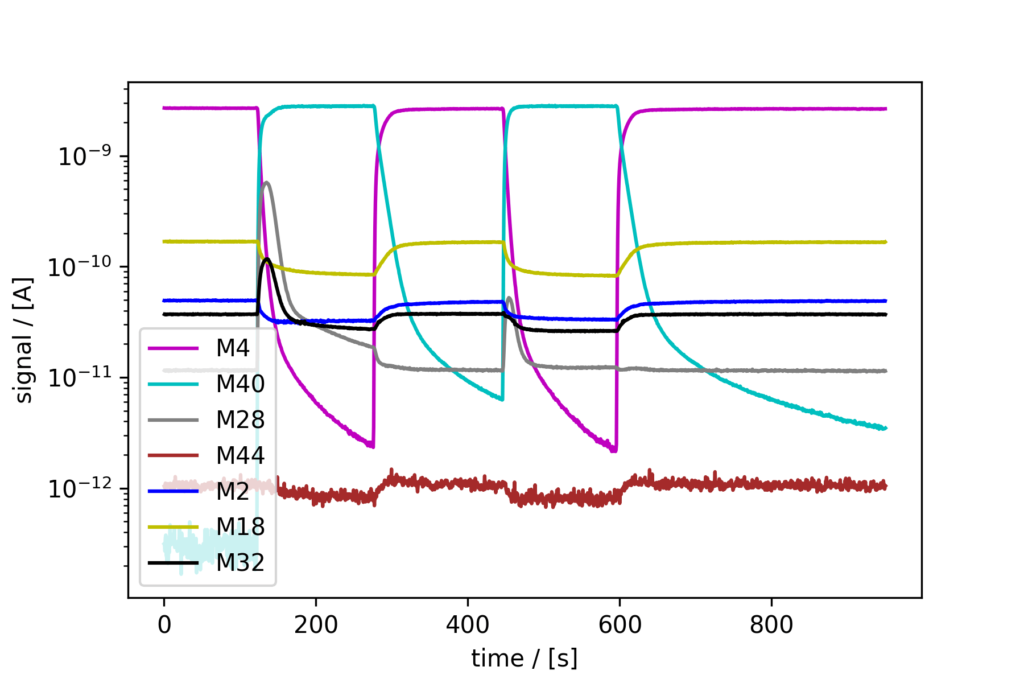
Learn how to send Ar and He gas pulses through the EC-MS gas exchange system with minimal switching time. Covers the step-by-step MFC and valve sequence, plus expected switching times — roughly 20 seconds from He to Ar, and 50 seconds from Ar to He.
Avoiding MS‐Signal Fluctuations Caused by Bubbles
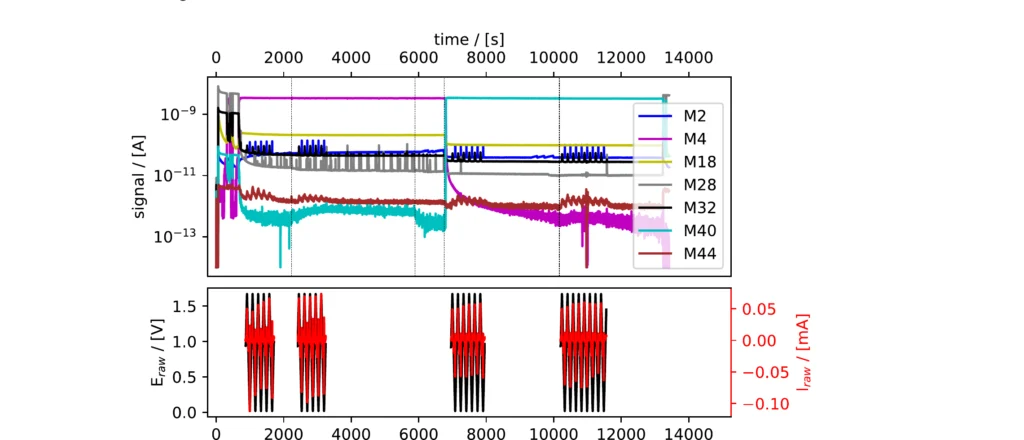
A detailed troubleshooting guide for identifying and preventing MS signal fluctuations caused by bubbles — covering electrolyte injection defects, cell (re)mounting steps, pressure set-point tuning, and how to distinguish bubble-related M28/M32/M40 spikes from normal signals.
Non-aqueous chip performance
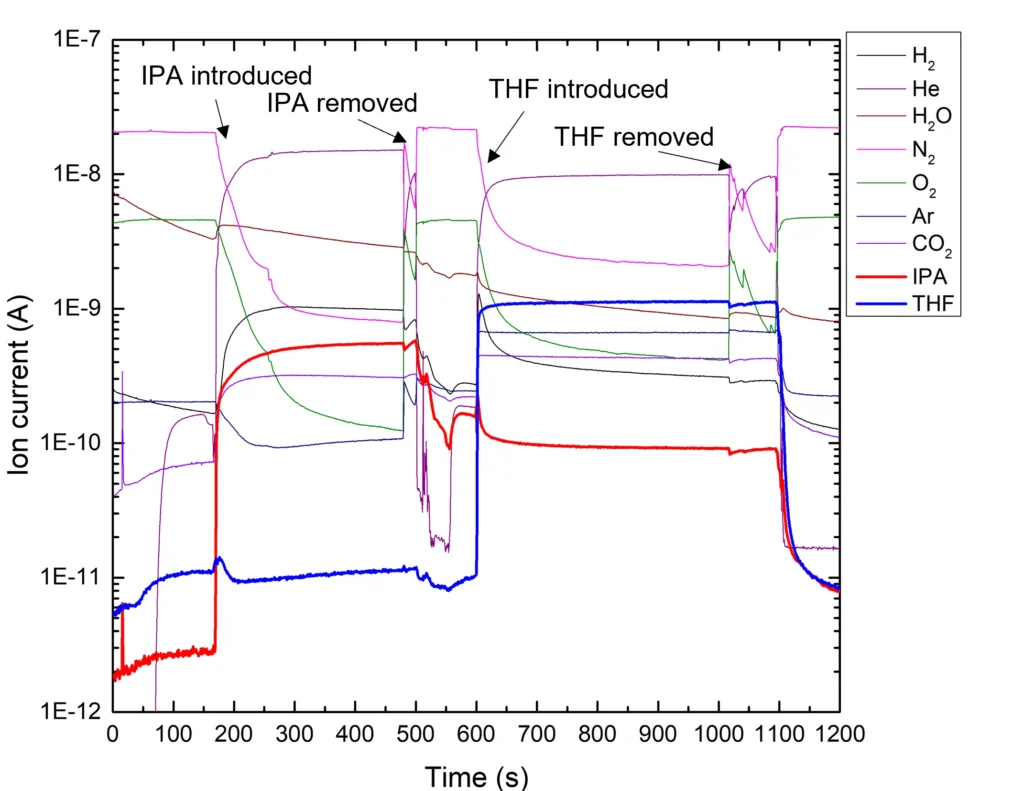
EC-MS Technical Note #4: how non-aqueous chips perform in IPA, THF, and KOH — CV and chronopotentiometry comparisons against standard chips.
Soft ionization
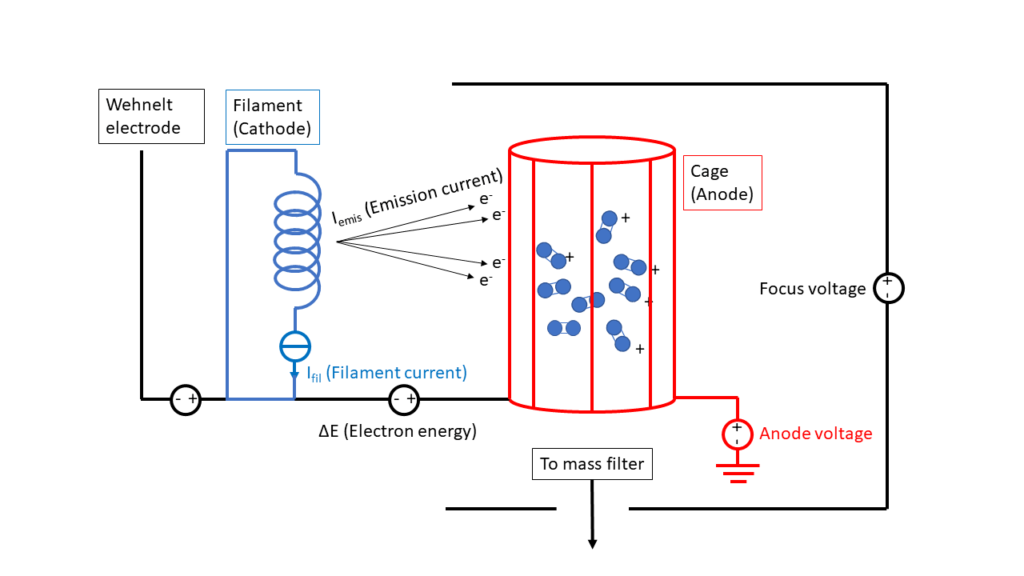
This technical note explains soft ionization in EC-MS — operating at low electron energies (15–22 eV) to minimize fragmentation — and shows how it separates the NH₃ signal from water’s overlapping OH⁺ fragment at m/z=17, plus step-by-step guidance for safely adjusting ionization parameters in PV MassSpec.